



Overseas retailers increasingly require every garment and every carton to carry an encoded RFID tag before a shipment will be accepted. For an exporter this arrives as a specification document from the buyer, usually with a deadline attached, and it has to be met exactly — a tag that does not read is a tag that stops the container.
We supply the tags, encode them to the buyer’s scheme, print them and verify them before they leave us.
RFID labels and tags for exporters
Overseas retailers increasingly require every carton and every garment to carry an encoded RFID tag before the shipment will be accepted. We supply the tags, encode them, print them and verify them — so an export order does not sit at the door because the tags failed a read test.
Apparel and hangtag RFID
UHF inlays converted into hangtags, care labels, sew-in labels and price tickets for garment exporters, encoded with the serialised identity your buyer specifies and printed with the same barcode and human-readable data in one pass.
Carton, pallet and logistics tags
Larger UHF labels for shipping cartons and pallets, chosen for read range on the packaging material you actually use — cardboard, shrink-wrapped stacks and metallised film all behave differently, and the inlay has to be matched to them rather than assumed.
Encoded, printed and verified
Every tag is written, read back and checked before it leaves us, and dead inlays are removed from the roll rather than passed on. You receive a verified quantity, not a nominal one.
Printers, encoders and readers too
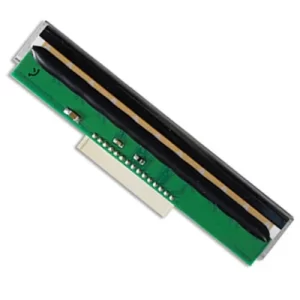
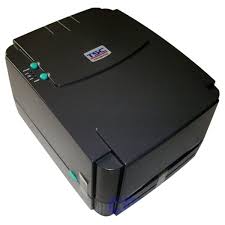
If you would rather encode in-house we supply and commission the RFID printers to do it — including the TSC and TSC Printronix RFID range — with the label stock, the software and the training to run them.
The part that goes wrong
RFID failures in export consignments almost always trace back to one of three things, and all three are avoidable:
- The wrong inlay for the material. An inlay that reads perfectly on a cardboard carton may read badly on a shrink-wrapped stack and not at all on metallised film. The inlay has to be matched to what it will actually be stuck to, not chosen from a catalogue.
- Unverified tags. Every roll of inlays contains some proportion that will not encode. If nobody reads them back, those dead tags ship, and the failure surfaces at the buyer’s door where it is expensive.
- Encoding that does not match the specification. Serialisation schemes are precise. A number formatted correctly but constructed wrongly passes a visual check and fails an automated one.
What we do about each
We match the inlay to your packaging — send us a sample of the carton, the garment or the film and we will test read range on the actual material before recommending anything.
Every tag is written, read back and checked. Dead inlays are removed from the roll rather than passed on. You receive a verified quantity, not a nominal one, and that distinction is the whole value of buying encoded tags rather than blank ones.
We encode to the buyer’s document, not to a generic default. Send the specification you were given and we will work from it.
Tag formats
UHF inlays converted into hangtags, sew-in and care labels, price tickets, carton labels and pallet labels. Apparel tags can carry the encoded identity, the printed barcode and the human-readable data in a single pass, so one tag does the job of three.
Or encode in-house
If your volumes justify it, encoding in-house is cheaper and faster than outsourcing. We supply and commission the RFID printers to do it — including the TSC and TSC Printronix RFID range — with the label stock, the software and the training to run them, and the same service cover as any other printer bought from us.
Not sure which way round makes sense? Tell us your monthly tag volume and we will tell you honestly which is cheaper. Below a certain number, job work wins and we will say so.